





Energy Regulatory Commission Chair and Mongolian Consulting Engineer E. Tuvshinchuluun discussed key events in Mongolia’s Energy Sector in 2024, including pricing and current issues - an Interview with B. Bayanjavzan of Energy Insight.
The Energy Regulatory Commission (ERC) has presented its 2024 annual work report. Let us begin by reviewing the notable events of the past year?
For the ERC, 2024 was a year with a heavy workload. Among many tasks, the most significant was the reform of energy prices and tariffs. While the public mostly perceives it as merely a price increase, we consider it a comprehensive tariff reform.
First, it is important to understand why the prices and tariffs needed to be changed and reformed. For many years, energy prices and tariffs were set below actual costs. As a result, the sector fell into losses, which accumulated to a degree that created economically difficult conditions for maintaining normal operations. Starting from June 2024, enterprises and organizations in the sector reached a level where they had to take loans from banks just to pay their employees’ salaries. Moreover, factories and companies were unable to carry out repairs and upgrades; with large debts in taxes and insurance, their employees were deprived of access to health and social services. Such difficulties necessitated urgent changes in prices and tariffs.
When the changes were implemented on November 15, several innovations were introduced. First, the tariffs were set strictly at cost without any profit margin. Second, a tiered tariff based on consumption was established. Third, a new peak-load tariff was introduced for household consumption. Fourth, since the tariffs were set to cover costs, the reform aimed to proceed with indexing going forward to maintain the system comprehensively.
There are varied opinions among citizens regarding whether tiered tariffs are right or wrong. Tiered tariffs are a common form internationally. Mongolia has 888,000 households as electricity consumers. If prices were raised uniformly for all consumers, many difficulties would arise. Consumers have different income levels and living standards. Therefore, the principle applied is that those who consume more pay higher fees. Behind this lies the issue of energy conservation - in other words, the principle is that if you save energy, you pay less.
By introducing a peak load tariff for household consumption, consumers have the ability to manage their own usage. For example, if one heats with a heater during nighttime hours and uses less electricity during peak load periods, it creates conditions for greater economic efficiency at the household level. In other words, consumers are given choices.
Previously, a product priced at MNT 280 was sold at an average price of MNT 210. This difference resulted in a loss for every 1 kWh consumed. In any case, the tariff has now been brought to cost-reflective levels. Since it is necessary to apply indexing going forward, formulas and calculations have been developed. The indexing will consider four factors: inflation, changes in the exchange rate of the US dollar, the price of imported electricity, and the cost of new energy sources. Therefore, going forward, prices will float according to market principles. If the country’s economic situation improves and the US dollar exchange rate and price of imported electricity decrease, consumer prices should correspondingly decrease; if these factors increase, prices will rise. After many years of price controls, the goal is to gradually move towards a market-based system where tariffs adjust in smaller increments rather than sudden 40–50 percent increases. The current principle is to proceed with indexing accordingly.
Our organization issues special licenses for electricity generation, distribution, transmission, and supply. Last year, we successfully digitalized our operations to make them simpler, faster, and more transparent. The process of preparing documents for licenses, issuing licenses, and receiving customer complaints and applications has been moved online. Additionally, we organized campaigns promoting savings, such as “Let’s Manage Our Consumption” and “Let’s Save Energy.”
Let me clarify one point from your remarks. Did the reform take place because of the price increase, or did the price increase result from the reform being initiated?
The issue of increasing tariffs has been ongoing for many years. The previous chairs and leadership of the Energy Regulatory Commission (ERC) have consistently attempted to bring tariffs closer to cost-reflective levels. Between 2001 and 2022, electricity tariffs were adjusted 12 times, which means changes occurred approximately once every two years. In general, tariff increases are implemented only after extensive calculations, research, monitoring, and preparation. Therefore, discussions and studies regarding price increases had already been underway prior to the reform. However, the process of increasing tariffs happened to coincide with the reform initiative. Naturally, the tariff increase was strongly supported by Deputy Prime Minister and Chair of the National Energy Reform Committee T. Dorjkhand, Minister of Energy B. Choijilsuren, and certain members of Parliament. The Government also endorsed and accepted our calculations. It became clear that tariff adjustments only occur when multiple conditions align. This is because consumers are never in favor of price increases-understandably so, as it directly affects their personal expenses. On this occasion, political support from the Government played a significant role.
The issue of increasing tariffs has been ongoing for many years. However, the process of increasing tariffs happened to coincide with the reform initiative.
When the tiered tariff system was introduced, was there concern that it would be nearly impossible to keep household consumption below 150 kWh, and that the majority would fall within the 150–300 kWh range?
We conducted sufficient research and calculations. Currently, 45% of all consumers use 0–150 kWh, 40% use 150–300 kWh, and 15% use over 300 kWh. These figures are based on both monthly and annual consumption data across all users. Therefore, 85% of consumers fall within the 0–300 kWh usage range.
As for the remaining 15%, they fall into two distinct groups. The first includes households in ger districts that use electric heating. Among these, around 23,000 households rely entirely on electric heating, and another 22,000 use hybrid systems, totaling 45,000 households. The second group consists of large houses located in the valleys behind Bogd Khan Mountain and summer homes, all of which use electric heating. These two groups account for the highest consumption levels. In response, the government was informed of the situation and took measures such as extending off-peak discounted hours for these households.
We have also re-assessed the impact following the price increase, and some positive results have been observed. People have started to reduce their excessive consumption. According to the National Dispatch Center, even peak demand during the winter months of December and January decreased. This means there were fewer restrictions. In addition, households using electric heating have launched home insulation initiatives. They now understand that proper insulation helps save electricity. Some households have even installed solar panels in their yards to use renewable energy more efficiently. They are actively seeking out relevant information, guidance, and recommendations. This demonstrates that when energy prices are low, people do not tend to look for alternative solutions. On the contrary, when prices rise, they begin seeking other options-which, in one way, is a very good thing.
Due to a government decision, the increase in heating prices has been postponed. What actions is the ERC taking regarding this matter? How was the impact assessed?
The government resolution is not limited to postponing heating price increases-it stipulates that no price or tariff increases will be implemented across the country during the 2025 fiscal year. Since the decision to raise heating prices was scheduled to take effect on May 16, 2025, and had not yet been implemented, it was postponed accordingly. Naturally, the decisions we make must align with those of the government. As such, the increase has been deferred until January 2026. During this time, we are taking preparatory and related measures.
For example, a working group has been established by the order of the ERC Chairman to transition to a system of metered heating consumption. In this context, we are studying and calculating the feasibility of installing heating meters for all consumers in Ulaanbaatar. Paying according to actual consumption is the fairest approach. With the current system of charging based on area and volume, there is little incentive to save energy. However, if people pay based on metered usage, they will be encouraged to conserve and lower room temperatures, which in turn reduces bills. A final conclusion based on the research and calculations has not yet been reached. Within the next two weeks, we will organize a presentation to the sectoral ministry and the Reform Committee.
There is a perception that the ERC is heavily influenced by politics. Do regulatory bodies face political pressure? Regardless of public opposition or political influence, what principles guide regulators to ensure prices and tariffs reflect the sector’s reality and market conditions?
That is an excellent question. The ERC is a collegial decision-making body. Specifically, five commissioners openly discuss issues and make decisions based on majority vote. Of these five, three represent the government, one represents the Mongolian National Chamber of Commerce and Industry (MNCCI), and one represents a consumer rights protection organization. Therefore, when a proposal to increase tariffs is discussed, the representative from the consumer organization may say, “You need to justify your calculations. This increase is unacceptable,” while the MNCCI representative might respond, “If we don't raise prices, companies will go bankrupt.” Each commissioner expresses their own position. Ultimately, a vote is held and a decision is made. Our meetings involve open debates. Consensus is not always reached, but decisions are made by majority, which helps minimize errors.
Political influence does exist-there’s no point in denying it. Consumers may also object. Recently, social media has become a major influencing factor. Politicians may publicly oppose tariff hikes. There is pressure from many directions. Therefore, we strive to make decisions with minimal external influence.
Some believe the ERC should make decisions independently without consulting anyone. But we live in а constitutional society. Moreover, since energy pricing is a foundational economic component, we must present and consult with the government and relevant ministries to some extent. Changing energy prices can significantly affect inflation and other factors, so proper communication and explanation of these influences is essential before making our decisions.
The ERC has highlighted the energy savings achieved by obligated consumers in 2024. However, those savings often come at the expense of company revenues. Ideally, energy-especially in the industrial and mining sectors-should be used efficiently as it is a cornerstone of the economy, shouldn’t it?
The ERC is responsible for enforcing the Law on Energy Conservation. The core concept of this law is that consumers whose consumption exceeds a specified threshold are designated as obligated consumers and must implement energy-saving measures. Under this arrangement, high-consumption users-typically factories and institutions-become obligated consumers. However, mandating reductions in consumption is not necessarily the most effective approach. In general, energy saving is tied to individual motivation and financial capability, so the system should encourage such incentives. We are working on introducing a mechanism where consumers receive some level of reward for achieving savings.
Whether a company or an individual, they directly benefit from the economic efficiency of their energy savings.
If large obligated companies reduce their energy consumption, it is ultimately in their own interest. The more they save, the less they pay. Whether a company or an individual, they directly benefit from the economic efficiency of their energy savings. The energy saved through efficiency measures can even be equivalent to the output of a small-capacity new energy source.
There is a tendency to view obligated consumers and their savings as a form of restriction. For example, when the grid is overloaded, they are the first to be told, “Stop or reduce your energy consumption,” or “Your usage is excessive and must be cut.” Is that the case?
Restrictions are a separate issue. We have trained energy auditors to a certain standard. These auditors visit industrial sites to analyze energy usage, provide recommendations for savings, and ensure the companies take action based on those recommendations. In this way, a certain amount of savings is achieved annually. However, this should not be equated with direct restrictions. On the contrary, if feasible, our energy sector should support rather than restrict. Limiting large industrial users means a reduction in the revenue flowing into our sector. The current restrictions in place are due to energy source shortages and the inability to meet growing demand, so we are imposing time-based, scheduled limitations. On the other hand, if savings are implemented effectively, current restrictions can be reduced.
What is the ERC policy regarding the expansion of distributed energy sources?
There are three types of renewable energy sources. First, households may install solar panels or wind turbines to meet their own electricity needs. Second, medium scale sources such as 10–30 MW solar or wind power plants can be constructed to supply energy to the grid. Third, large-scale power plants can be developed to produce electricity for export.
The ERC supports policies that encourage households to install solar panels for self-consumption. Previously, when households generated excess electricity and supplied it to the grid, they were compensated at the same rate they paid to consume electricity from the grid-MNT 140. Recently, this was revised, and now the price for supplying to the grid has increased to MNT 285, and to MNT 300 during evening peak hours. The ERC has supported this through its tariff policy. With such incentives in place, citizens are expected to show greater interest in distributed energy sources.
Recently, the Ministry of Energy and the National Committee on Reform have been discussing the construction of solar power plants with battery storage in several locations. One Mongolian company has commissioned a project in Erdene soum of Dornogovi province-a solar plant with a 30 MW capacity and a 20 MW battery storage system.
There were two outages on the Sainshand transmission line, during which the entire Dornogovi province went dark. However, the "Erdene" solar power plant was able to keep only Zamyn-Uud soum powered and lit. This is a great example. If similar plants were built at the ends of long transmission lines or in provincial centers, those areas could remain powered during central system outages. Therefore, deploying standardized power sources with similar capacities across regions could prevent local blackouts. Additionally, energy loss over long transmission lines would be reduced. This solution offers multiple advantages and is highly valuable for the energy sector.
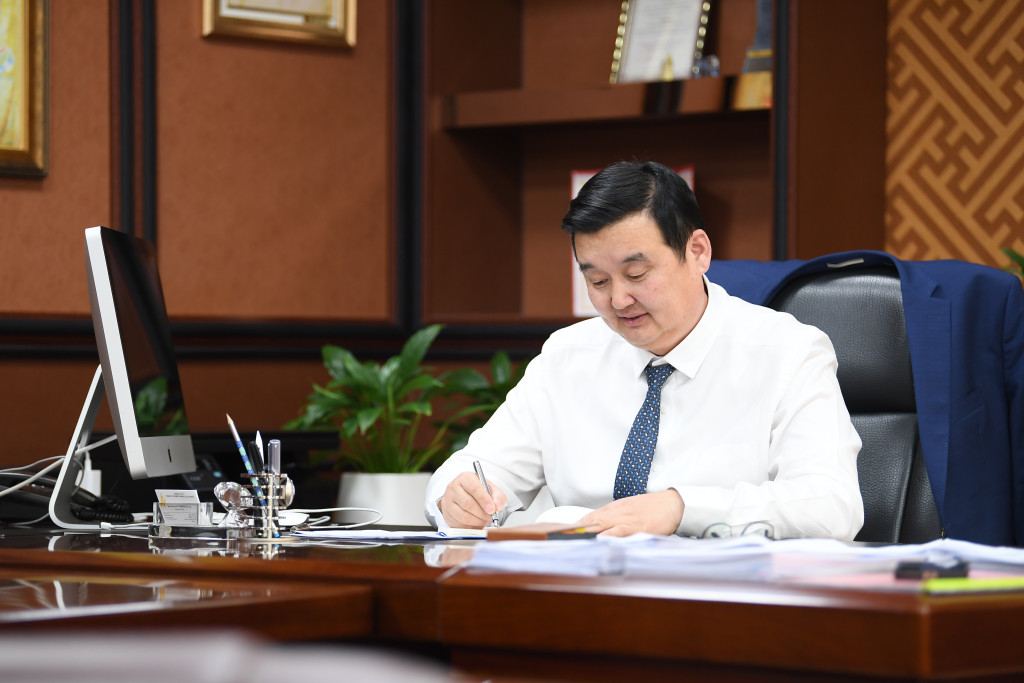
What has the current leadership of the ERC focused on implementing?
I and the other commissioners were appointed in August 2022. On November 1 of that year, we raised tariffs for businesses by 14–38 percent. Due to the difficult post-COVID conditions, we were unable to raise household electricity prices at the time. Later, in 2023, we gradually increased heating prices in rural areas. Last year, we revised household electricity tariffs. Over the past three years, our team has worked together under the leadership of the ERC to adjust prices and tariffs to some extent. Some may criticize us as "those who only raise prices," but while price hikes may be difficult for consumers, they are essential for the sector. For example, coal prices used to increase by only MNT 2,000 every two years. However, over the past two years, the price per ton has increased by about MNT 20,000.
Electricity tariffs do not only reflect the energy sector itself. They encompass all costs-from blasting coal at the mine, transporting it by rail, generating electricity at power stations, to delivering it to consumers. Thus, the mining sector, rail transportation, and the energy sector have all been operating at a loss. We have recently approved loss-free prices for both the mining and rail sectors. Now, we are focused on the energy sector. In any case, eliminating operational losses in these two sectors is already a significant step forward.
What is your principle when it comes to your work?
As for me, I believe that during the time I hold a particular position, I must do my best to implement what I have envisioned and planned. That is why we, as a team, made a bold decision on the issue of pricing. It would be far easier to just “hide” behind a desk and do nothing. You wouldn’t receive criticism from the public, and when your term ends, you just leave quietly. But given the severe challenges this sector is facing, I believed it was necessary to push forward with the pricing reform as much as possible.
Mongolia must have a single transmission network. This is in line with national security recommendations. The law stipulates that the transmission network must be state-owned. Therefore, when I was appointed as Director of the Central Regional Electricity Transmission Network SOE in 2010, I held the position that there should only be one state-owned company. Based on this, I renamed it to the National Power Transmission Grid SOE and redefined its vision as becoming the National Smart Power Transmission Grid. At that time, the concept of a “smart grid” hadn’t even started circulating in Mongolia. It drew criticism, with some saying, “They’re trying to centralize too much. How can you have a smart grid when people aren’t yet smart?” This initiative was carried out together with young professionals at the company and with now MP M. Enkhtsetseg. Today, nearly everyone agrees that there must be a single transmission grid. So, if you’ve been appointed to do a job, you should push forward with your plans boldly, without fearing criticism. If it doesn’t work out, then someone else will take your place. But you should be proud of what you’ve accomplished. Better to try and be dismissed than regret later what you could have done.
What are your thoughts on the establishment of the “Erchist Mongol” LLC. There are a variety of opinions in the industry, with some saying it is a regression, even a return to the 2000s?
There is relatively little information available about “Energetic Mongolia.” So far, no official meetings or discussions have taken place with the Energy Regulatory Commission (ERC). Since there is not enough information, it is too early to make any judgments. However, I support the statement by Chief Cabinet Secretary N. Uchral about implementing specific measures to improve governance, efficiency, and cost reduction in energy companies. The ERC primarily works with financial and cost-related matters, so they may be looking at it from that angle. The energy sector prepares for the next winter as soon as one winter ends. Therefore, under no circumstances should the companies’ operations be disrupted due to a lack of coordination between the Ministry of Energy and the “Erchist Mongol” LLC. As I understand it, companies are now convening their boards of directors and waiting to change their target governance structures. If this issue is not resolved quickly, the next winter will arrive before we know it.
It has been some time since the energy reform began. Some say it has lost momentum or stalled. How do you assess the past and what is your outlook? What do you believe caused the reform to stall?
Talk of energy reform really picked up after the 2024 elections. The National Reform Council was established, and public expectations rose significantly. It seems we haven’t been able to meet those expectations. Nevertheless, the first step - pricing reform - has been implemented. Now people are asking, “Has the reform stopped already?” Of course, the council, chaired by the head of the National Reform Council, is continuing its work, and I’m a member of that council.
From my personal perspective, what should energy reform look like in Mongolia? Reform is a broad and complex concept. If we try to do everything at once, we’ll run out of time. The initial step - pricing reform - has been partially carried out. So what’s next? We must revise our policy on energy sources.
This means determining what type of sources will dominate our sector. Will it continue to rely solely on coal? Or should we include solar, wind, hydropower - even hydrogen or gas-based sources? We need a clear policy on this. After that, the issue of attracting investment into the energy sector arises. Our current laws don’t adequately address this. The sector can only grow with significant investment. I hope that the National Reform Council will discuss attracting such investments. Then we need to determine what market model to adopt - whether to stick with the current single-buyer model or move toward a new one. Globally, there is no perfect, universally ideal energy market model. Many types exist. Countries choose based on the structure, characteristics, and capacity of their own energy sectors.
In Mongolia, human resource policy in the energy sector is not being discussed at all. Technology is developing rapidly. Even the equipment used in our energy sector has evolved. We must train specialists who can work with this new generation of equipment. We should offer professional training and refresher courses in developed countries. That’s another issue that needs to be addressed at the policy level.
Then there’s the question of how the energy sector will transition into a smart, digital form. There’s also increasing talk about energy exports. Who will we export to? What sources will we use? These need to be addressed with clear direction at the policy level.
I personally believe that only by developing policies and integrating them into the legal framework can we achieve a comprehensive reform. This is just my opinion - I don’t know how others see it.
Carrying out reform means first accurately assessing and understanding the current situation. Only then can we clearly define where the reform begins, where it ends, and what work must be done in between. Otherwise, if we talk excitedly about reform, raise high expectations, and then fail to deliver, what will we do then?
Thank you for the interview.


 3675
3675
 2025-11-24


