Reform and “Erchist Mongol”
 1145
1145
 2025-08-20


The government has decided that a unified structure is necessary for state-owned energy companies. As such, Erchist Mongol LLC, a state-owned enterprise modeled after Erdenes Mongol, has been established to consolidate 44 non-mining companies. Among these, 27 are energy sector entities involved in distribution, generation, and transmission.
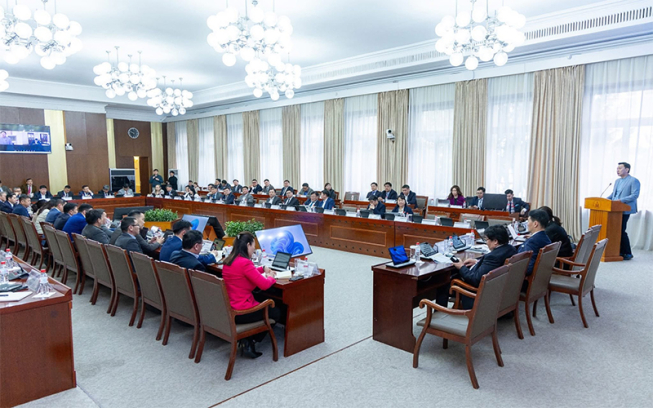
Whether this reorganization and consolidation of companies will advance or hinder the energy sector will depend on the precise management of this new entity. Erchist Mongol was established by a joint decree of the Prime Minister and the Head of the Cabinet Secretariat. Since the company charter and list of companies to be consolidated were finalized, approximately five months have passed. During this period, an executive director has been appointed, and members of the Board of Directors (BoD) are being named. According to clause 6.4 of the company charter, “The Board of Directors shall appoint the executive management through an open competition.” However, by April, the board had not yet been fully formed, while G. Amartuvshin had already been appointed as CEO. According to unofficial sources, B. Battsetseg, Deputy Head of the Cabinet Secretariat, will serve as chair of the board. Other board members include B. Telmuun (Director of the Budget Policy Department, Ministry of Finance), B. Yeren Ulzii (Director of the Investment and Technology Department, Ministry of Energy), P. Chandmani (Director of the Strategic Planning and Investment Department, Ministry of Economy and Development), and Ts. Bayar-Erdene (Director of the State Property Policy Implementation Department, State Property Agency). Additional members will include a representative from the Ministry of Road and Transport Development and independent members.
Erchist Mongol will operate similarly to Singapore’s Temasek Holdings and follow the model of Erdenes Mongol. The aim is to transition state-owned enterprises toward market-based performance evaluation using private sector methods such as KPIs. This means the holding’s operations will remain independent of direct government interference and political influence.
The affiliated companies will be grouped into four sectors: energy, banking and finance, road and transport, and others. Overlapping functions will be centralized into shared service centers, with the goal of reducing administrative costs by up to 50%. Initial estimates suggest MNT 4.9 billion can be saved in salaries and operational expenses. Looking ahead, Erchist Mongol will aim to enhance the value of its shares and eventually become a publicly listed company capable of raising international capital, according to Cabinet Secretariat Head N. Uchral. He emphasized that key national security sectors, such as energy, should not be directly privatized but reorganized instead. A restructuring plan has been proposed to consolidate energy companies into seven entities, leading to budget savings. In managing its portfolio, Erchist Mongol will support its subsidiaries in raising capital, consolidate loss-making companies with similar functions, and, if necessary, liquidate them. Crucially, the holding company will not interfere with the budgets or financial decisions of its subsidiaries. Instead, it will be financed through a 1% share of each subsidiary’s revenue. While 1% may seem modest, it becomes substantial when applied to all 44 companies under its umbrella-including major entities like MIAT, UBTZ, and the Central Securities Depository. More than 60 percent of the new state holding company will be energy sector companies. As such, many questions and uncertainties have arisen regarding what kind of changes this will bring to a sector currently in crisis-particularly how it will align with ongoing reforms and how it will address the Ministry’s existing contradictions and opposing positions. Over 90 percent of Mongolia’s energy sector operations are handled by state-owned companies. In fact, over the past year alone, the sector has accumulated more than MNT 350 billion in debt and posted losses amounting to MNT 270 billion.
However, it would be an oversimplification to say that all 27 energy companies to be consolidated under Erchist Mongol are operating at a loss. In terms of annual sales revenue, Ulaanbaatar Electricity Distribution Network SOJSC leads the group. Excluding the National Dispatching Center, the combined total sales revenue of the other 26 companies stands at MNT 3.3 trillion, with management expenses amounting to MNT 156 billion. From this perspective, it is clear that there is a need to reduce the losses, redundancies in staffing, and bloated administrative expenses associated with state-owned companies. At the same time, it is understood that a core responsibility of Erchist Mongol will be to improve the profitability of these companies and to introduce sound investment management. Until now, shares of state-owned energy companies were held by the Ministry of Energy and the State Property Agency. This arrangement will change: 66 percent of total shares will now be managed by Erchist Mongol, while the remaining 34 percent will be retained by the central government agency responsible for energy affairs. On this matter, Minister of Energy B. Choijilsuren submitted an official letter to the Head of the Cabinet Secretariat stating: “Designating Erchist Mongol as the representative for 66 percent of the shares in state-owned energy companies restricts the authority of the central government body responsible for the sector. This undermines unified policy direction, professional oversight, and integrated governance, and complicates the chain of accountability. It also increases layers of decision-making in strategic, critical energy companies-potentially hampering daily emergency management, preventing swift response to accidents and outages, and jeopardizing the continuity and reliability of energy supply to consumers. Given the current conditions where power plants are operating under heavy load and emergency protocols, this may lead to diminished autonomy in urgent operations and even result in system wide failures that could cause a nationwide blackout.”
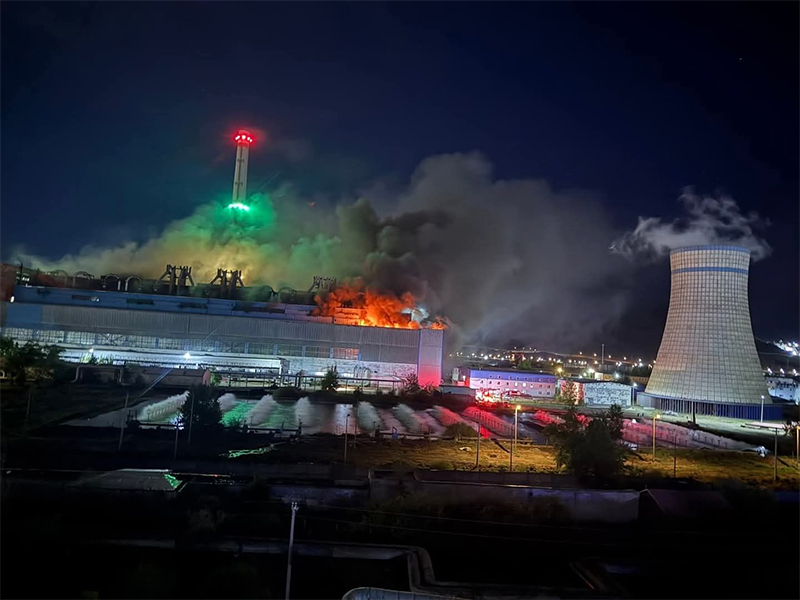
With the formation of the new holding company, it is now clear that the Ministry of Energy will have a reduced ownership stake in state-owned companies. In short, the Ministry's “authority” will be diminished, and it will no longer make direct appointments to company positions. One of the goals of merging state-owned companies under Erchist Mongol is to reduce such politically appointed positions. In truth, a recent tweet describing the energy sector as having “four heads” is not an empty metaphor. Key decisions in the sector currently depend on four figures: N. Uchral, Head of the Cabinet Secretariat; T. Dorjkhand, Deputy Prime Minister and Chair of the National Energy Reform Committee; B. Choijilsuren, Minister of Energy; and G. Amartuvshin, CEO of Erchist Mongol LLC. Amidst the fragile process of government reorganization, the recent emergency situation at Combined Heat and Power Plant 3 clearly exposed the risks of decision-making being entangled or delayed due to overlapping leadership. Given the sector’s strategic significance in ensuring Mongolia’s national security and independence, experts agree that appropriate state involvement in the energy sector is necessary. However, neither the government nor sector officials have clearly defined what that level of involvement should be. Eight months ago, the coalition government announced a reform of the energy sector. It proposed restructuring the sector to implement comprehensive short-, medium-, and long-term reforms. On October 30, 2024, Deputy Prime Minister and Chair of the National Energy Reform Committee T. Dorjkhand stated: “The goal of this reform is to transition the sector from a state monopoly to private sector participation, to dismantle the centralized system in favor of decentralized energy sources, and to modernize energy technologies. All of these steps together form the comprehensive content of energy reform.” This generated broad expectations within the sector and society-to break up the state monopoly, increase private sector involvement, fix the vertically integrated management system, and introduce competition among producers. According to projections by the National Energy Reform Committee, the sector’s medium- and long-term loans will be repaid by 2027. Within that timeframe, 3 to 4 energy companies are expected to go public. Although the reform process is underway, the sector still lacks unified policy direction, coherence, and clear governance. A perception is forming that the Ministry of Energy will be responsible for policy, the ERC will oversee pricing and tariffs, and Erchist Mongol will manage company operations and investments. If Erchist Mongol can successfully implement its goals following a model similar to Temasek, the reform could evolve into a truly meaningful transformation of the energy sector.

 1145
2025-08-20
1145
2025-08-20