J. Enkhbayar: Mongolia’s Energy Reform Is Stalled by Lack of Investment
 43
43
 2026-03-25


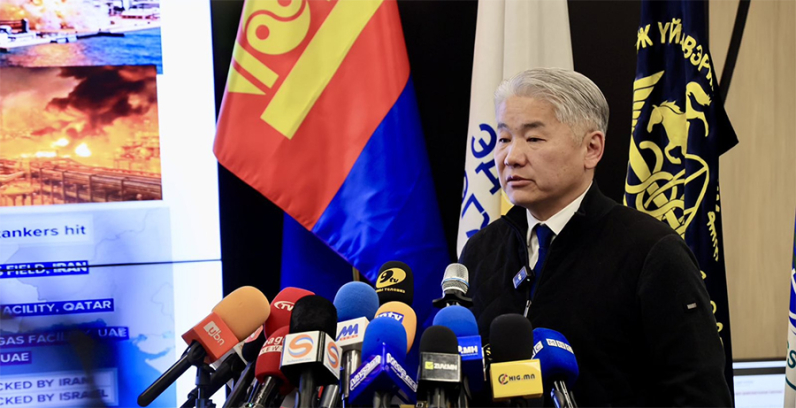
In connection with the escalating tensions in the Middle East, First Deputy Prime Minister and Minister of Economy and Development J. Enkhbayar briefed the public on March 24, 2026, on the potential impacts on Mongolia’s economy, ongoing issues, and planned response measures. During his remarks on government policies and next steps, he also addressed the key challenges facing the energy sector.
Minister J. Enkhbayar stated, “Countries around the world are increasingly viewing oil and gas-based energy as risky. The consequences of the oil crisis will not be resolved easily and are likely to persist for many years. As a result, countries are revising their energy policies toward renewable energy, nuclear energy, other alternative sources, and even coal-based energy. In this context, Mongolia will take coordinated policy measures to accelerate large-scale renewable energy projects. If the proposed gas pipeline project passing through Mongolia is implemented, it will enable the development of gas-based energy sources and contribute to addressing air pollution.”
He emphasized that energy remains a top priority, noting that it is the foundation of development but has become a key bottleneck for Mongolia.
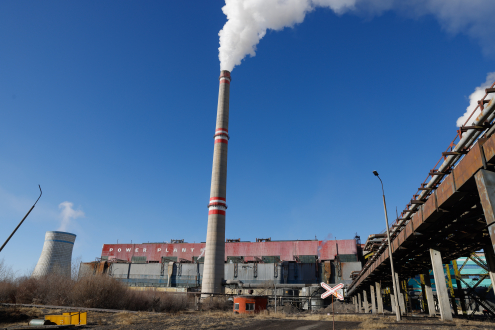
As of 2025, Mongolia generates 1,800 MW of electricity domestically and imports around 300 MW, with a total available capacity of 2,100 MW. However, this capacity is no longer sufficient to meet growing demand. Current pending demand has reached 2,266 MW. A similar situation exists in the heating sector. In Ulaanbaatar, heat production stands at 3,558 Gcal/hour, while unmet demand is estimated at 1,160 Gcal/hour.
Of the total 3,240 MW of electricity connection requests, around 70 percent remain unmet. In Ulaanbaatar, approximately 90 percent of the 1,139 Gcal/hour heat connection requests have not been fulfilled..
“This indicates that economic demand and expectations are high,” he said.
Due to policy uncertainty, investment in the energy sector has stalled. The government plans to take major measures, including liberalizing the energy sector, enabling private investment, and expanding renewable energy sources. Energy projects will be financed through the Development Bank, direct investment, and public-private partnerships, while the use of foreign loans and assistance will also be increased. For example, the Erdeneburen Hydropower Plant will be implemented using external financing outside the state budget. A total of 12 energy projects have been prioritized.
Mongolia’s socio-economic development programs for 2016–2030 have been approved by Parliament and carry the force of law. Within this framework, the government is preparing to submit the 2027 development policy to Parliament. Under the Law on Development Policy and Planning, all political parties and candidates are required to align with the national development program. Campaign platforms that deviate from it may be disqualified, ensuring continuity and stability of policy implementation beyond political cycles.
“The key issue is tariffs, which require adjustment. Detailed studies are currently underway. Today, Mongolians are among the consumers of the cheapest energy in the world. However, our energy reform has stalled due to a lack of investment. To accelerate economic development, this issue must be addressed at the government level. For many years, tariffs have been kept artificially stable, preventing investment and modernization. As a result, the energy sector has shifted from supporting growth to constraining it,” he noted. He added that the government is conducting detailed household-level assessments, including for a typical four-member household living in a 50 m², two-room apartment, to evaluate the impact of tariff adjustments on both ger districts and apartment residents. “In order to avoid economic stagnation, it is essential to urgently liberalize the energy sector, adjust tariffs, and create a favorable environment for investment,” he concluded.

 43
2026-03-25
43
2026-03-25