Prime Minister's dream will require 2000 MW of electricity
 777
777
 2024-01-10


GDP to surge by 6.1 times, resulting in a -3.6fold increase in GDP per capita, reaching USD 15000 and surpassing the threshold observed in developed countries worldwide.
This stands as the central tenet among the nine goals articulated in the "Vision 2050" development policy put forward by Prime Minister Oyun-Erdene. L. Achieving a threefold increase in today's GDP per capita over 27 years necessitates consistent and robust annual economic growth. This kind of growth is contingent on the construction of large factories, job creation, or the initiation of new mines on an annual basis. Drawing from the lessons of the past two decades, it becomes evident that substantial economic growth is typically realized after the implementation of mega-projects such as Oyu Tolgoi, Tavan Tolgoi, and the railway. Therefore, the realization of multiple mega-projects becomes imperative to meet the objectives outlined in Vision 2050. However, it is crucial to underscore that ENERGY is a prerequisite for the success of all these endeavors.
In the initial phase action program for the New Recovery Policy approved by the Parliament in 2021, several significant projects are highlighted:
- Establishing a cluster of small and medium-sized enterprises centered around the Erdenet Mining Corporation for copper product manufacturing. Simultaneously, plans include constructing a complex dedicated to processing copper concentrate and producing cathode copper from oxidized ore.
- Completion of domestic iron ore processing initiatives, namely "Mongolian Steel Complex I," Altanshireet Industrial Park, and Erdenet Steel Complex.
- Proposing the construction of a copper concentrate processing plant at the Oyu Tolgoi deposit, which is expected to boost the production of value-added products such as cathode copper, gold, and silver.
- Successful preparations and planning for the development of new settlement zones, free economic zones, and satellite cities.
- Commencing operations at the Tavan Tolgoi coal concentrator, thereby creating conditions for the comprehensive utilization of the deposit.
Within the initial phase, construction activities in Ulaanbaatar will focus on the development of satellite cities, specifically "Aero City" and "Maidar City." There will also be efforts dedicated to constructing sports facilities. As part of the Ger district redevelopment, housing for 45,000 households is slated to be provided, and the ambitious goal of establishing a subway system in the capital by 2028 is part of the new mayor's vision.
Looking ahead, "Vision-2050" encompasses the implementation of the following projects in the long term.
What kind of energy source will feed the implementation of these giant projects?
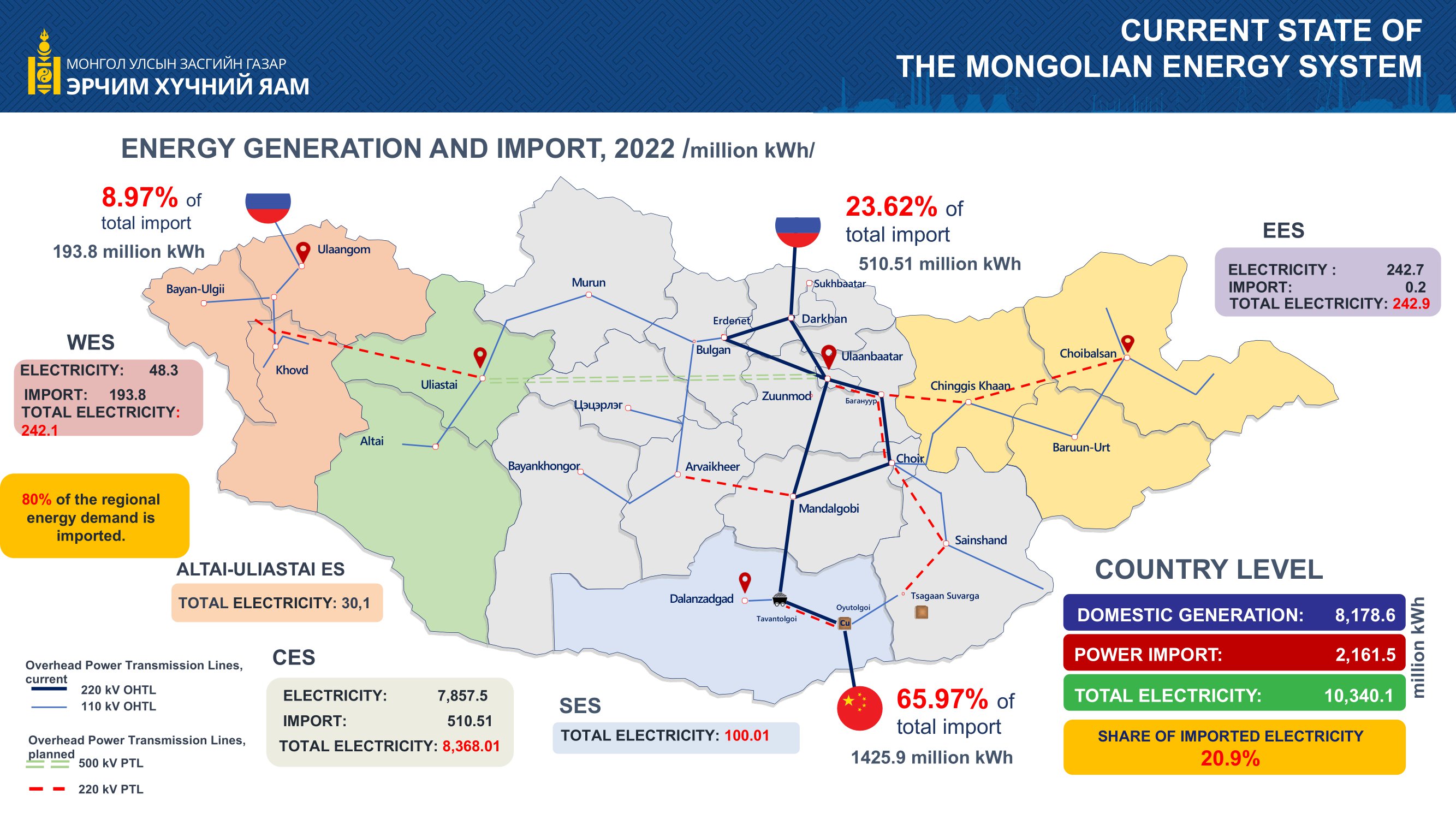
 Mongolia's existing total installed energy capacity stands at 1264 megawatts, which falls short of meeting peak loads. As a result, we depend on imported electricity to avoid power shortages.
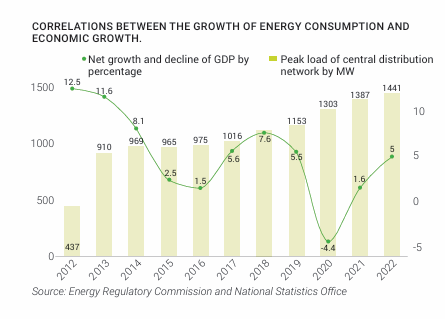
The aforementioned data illustrates a continuous increase in energy consumption over the past decade, irrespective of economic growth. The subsequent chart highlights a strong correlation between GDP growth and energy consumption. Notably, during the period of slowed GDP growth in 2015-2016, the nearly unchanged peak energy load indicates a challenge for the energy sector to keep pace with intensified GDP growth.
Our current installed power generation capacity is approaching a threshold where it may struggle to accommodate the load resulting from the addition of only a few thousand households, new schools, and kindergartens. For instance, in 2022, apartments for 23,201 households were commissioned, and 77 educational facilities, including schools, kindergartens, and sports halls, were constructed across the country. Since the s tart of 2023, the capital alone has seen the opening of 14 kindergartens, seven schools, and two elementary schools, according to the Ministry of Construction and Urban Development.
However, it has become evident that economic growth is not substantial, and our current energy capacity falls short of meeting normal demand. This situation underscores that the energy deficiency could pose a significant obstacle to the government's implementation of newly approved laws aimed at reducing traffic congestion in the capital city of Ulaanbaatar and developing the Ger district areas.
According to the estimates of the Energy Regulatory Commission, the average monthly electricity consumption of one household in Mongolia is about 320 kWh. If only 10% of the 200,000 households in the Ger district areas are converted into apartments, the electricity load will increase by about 7,000 MW per hour.
To put the subway system into operation in 2028, significant measures need to be taken from building the tunnel to preparing the infrastructure, implementing the LRT project, increasing the number of electric buses and cars, and increasing energy supply at every step in the future.
When will the additional capacity become available?
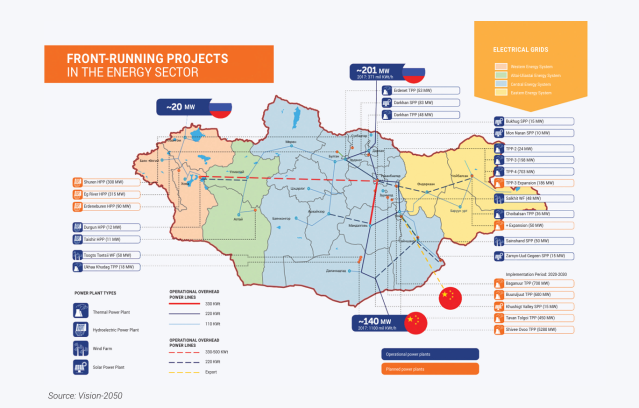
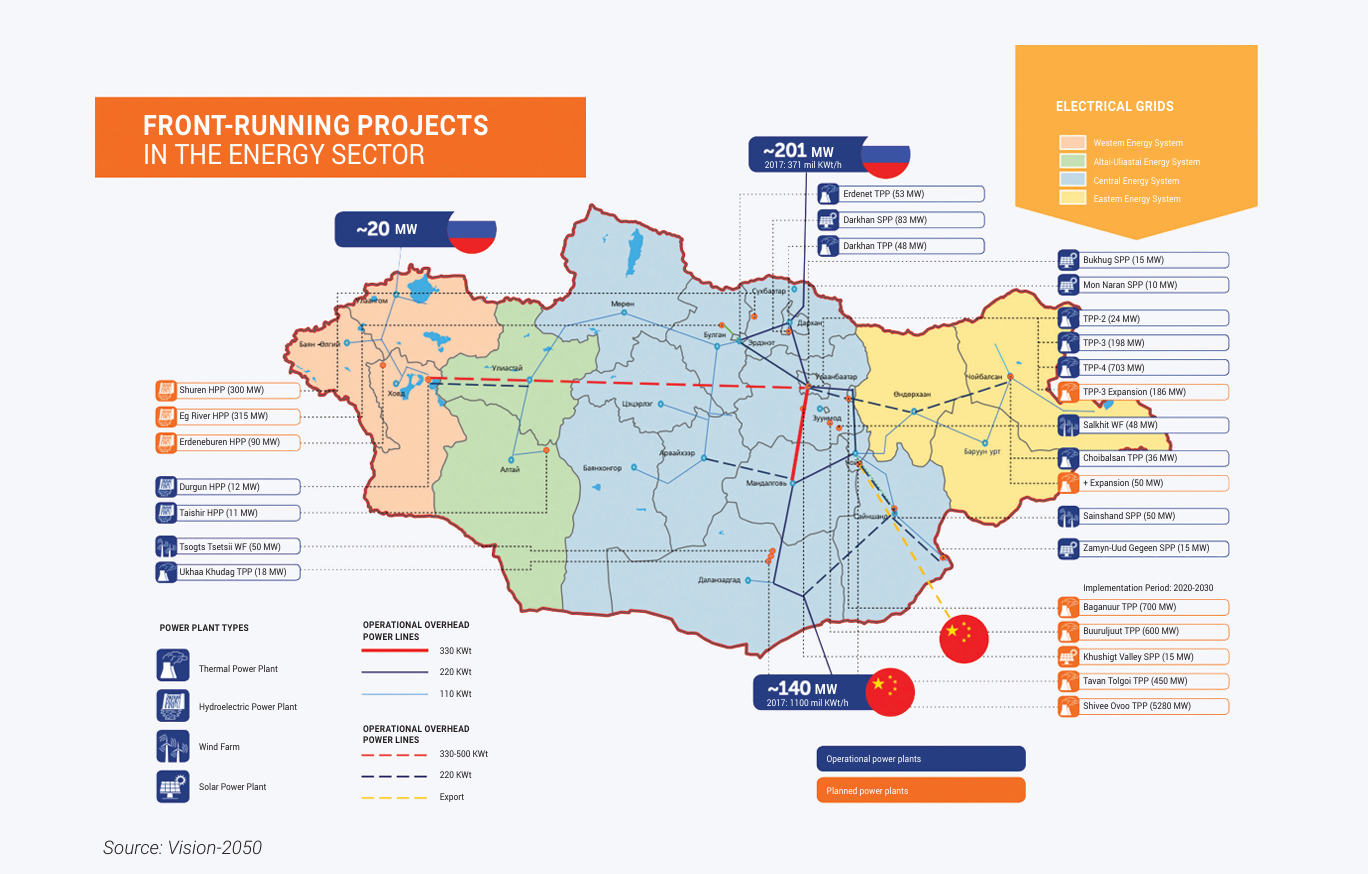
As evident, there are plans for eight power plant projects until 2030, yet not a single one of them commenced or looks promising. In a session, the minister, who lacks specialization in this crucial sector, mentioned that despite the completion of the 89 MW expansion and renovation of the fourth thermal power plant and the 35 MW expansion of the Erdenet thermal power plant in previous years, it is a temporary measure to address the existing high consumption.
Hence, the persistent question remains about how to meet the demands of major projects and immediate derivative uses.
The completion of the Amgalan 116-megawatt thermal plant expansion is anticipated this year, but official confirmation is still pending. Although the expansion has been operational, it has only ensured the current consumption and supply for the Bayanzurkh district and Uliastai area. Prime Minister Oyun-Erdene. L expressed the intention to promptly initiate and commission development projects such as the 250-megawatt upgrade of TPP-3, the 450-megawatt Tavan Tolgoi thermal power plant, the 400-megawatt Baganuur power plant, and the expansion of Choibalsan thermal power plant by 50 megawatts. However, the outcomes have been insufficient. The open bidding for Tavan Tolgoi power plant funding is still in progress.
This depicts Mongolia's current energy consumption landscape, with 51% of the total produced energy being consumed within residential districts. Consequently, a reduction in the ger districts and the execution of mega projects in the future are anticipated to decrease the number of low-energy consumers while increasing the count of large consumers.
As illustrated in the "Industrialization Projects" figure, Mongolia aspires to implement six large factories and nine major projects by 2050. Assuming each plant and project requires 70-100 megawatts of electricity, these large industrial endeavors alone would necessitate around 1,500 MW of energy. Additionally, the realization of Ulaanbaatar's envisioned metro, electric cars, electric buses, and the expansion of buildings under the housing projects would require at least 500 MW of electricity.
Hence, to actualize Vision 2050, it is evident from this year's energy constraints that constructing a minimum of 2,000 MW of energy sources is imperative and should commence promptly. The central tenet of "Vision 2050" cannot be achieved without augmenting energy supply and incorporating new sources into operation. The only viable means to accomplish this is a substantial increase in energy imports from neighboring countries, thereby further deepening energy dependence.

 777
2024-01-10
777
2024-01-10